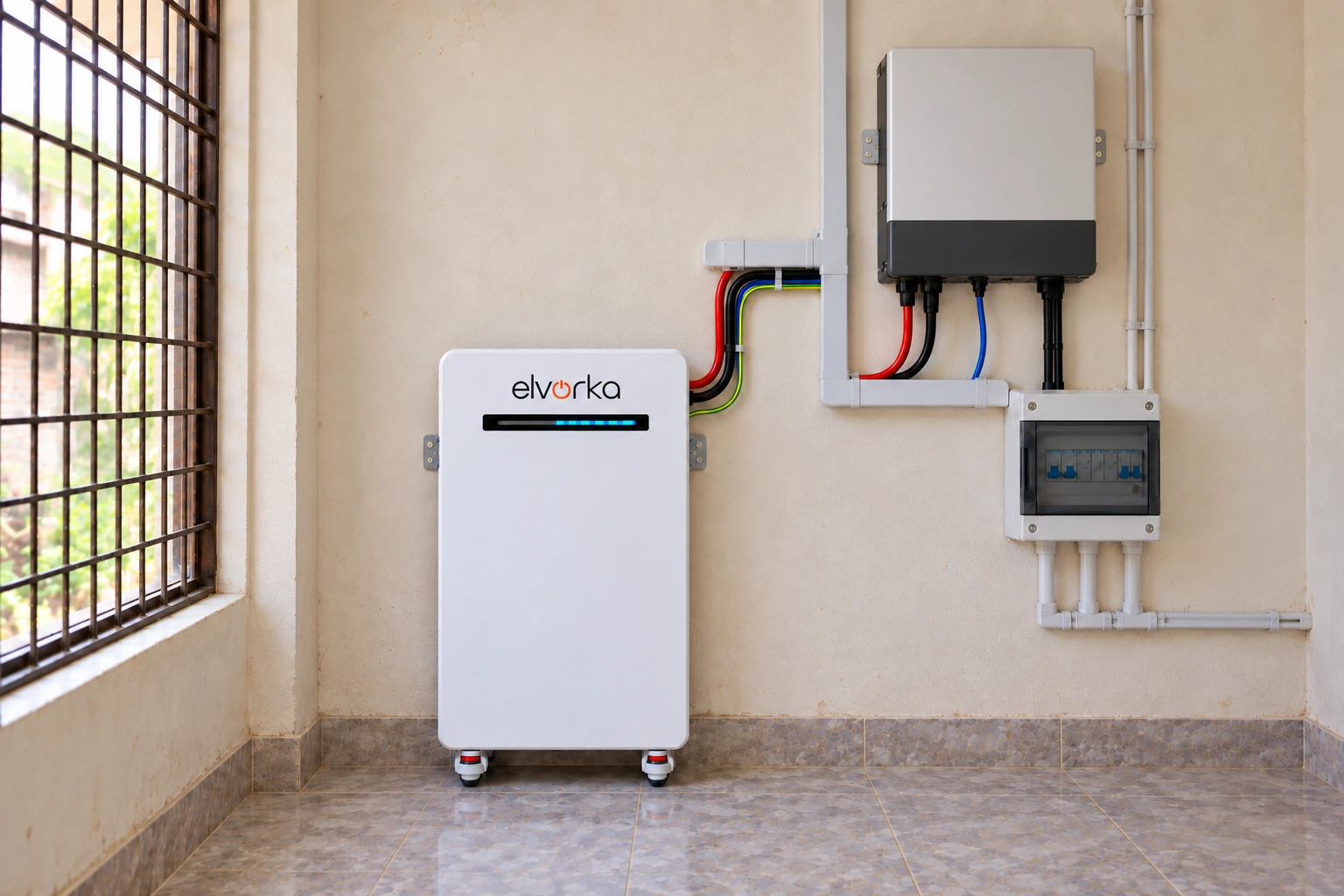
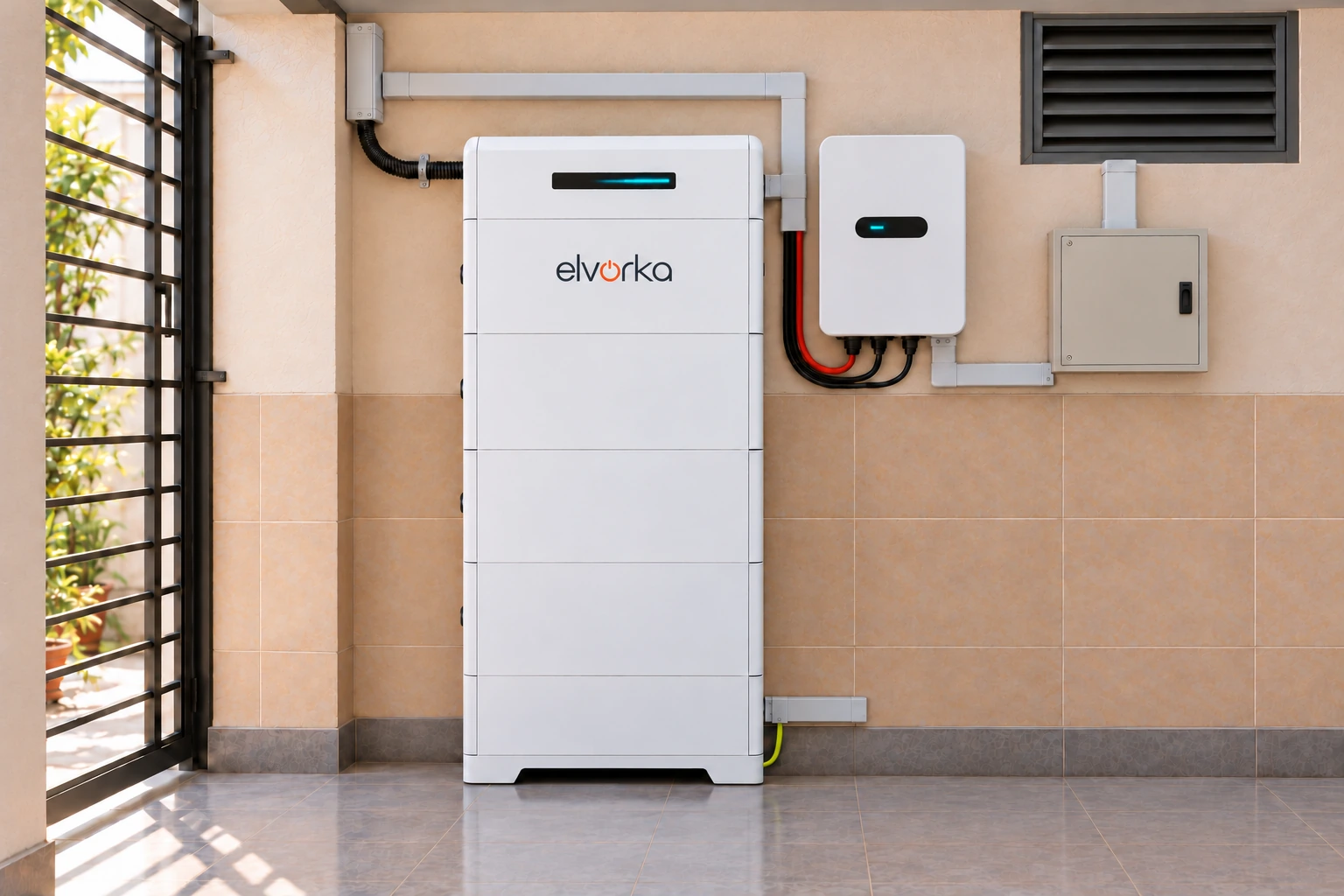
A dry utility room, a seasonally hot garage and a coastal service area place different demands on equipment. Assess conditions where the battery will stand, including the coldest and hottest periods. The following local profiles help frame the questions; they do not certify a particular installation.
These are generic selection profiles. Use a country edition for regional context, then check the conditions at the actual battery location. No single climate or electrical configuration represents every project.
Start with the proposed equipment space.
Dry indoor utility space
Consider moisture, access and the backup circuits before choosing the enclosure. A room described as indoors is not automatically dry or suitable.
EU 230 V combines battery and inverter in an IP21 enclosure. Confirm the required AC configuration and the selected manual’s ventilation and service clearances.
Questions for your installer
- Can condensation or water reach the equipment?
- Is the AC configuration confirmed for this project?
An unconditioned garage or service room
Record the lowest and highest equipment-space temperatures over the seasons; outdoor averages do not establish the temperature at the battery.
TR Pro lists charging at 0–55 °C and discharging at −20–60 °C. Optional self-heating requires exact-configuration confirmation. Do not use the discharge minimum as a charging minimum.
Questions for your installer
- Can the proposed charging temperature fall below 0 °C?
- Are shelter, cooling and maintenance access adequate?
An existing inverter project
A battery-only addition must follow the existing or planned inverter’s electrical and communication requirements.
TR Pro is a 51.2 V battery; HP Ultra is a high-voltage modular family. Voltage range, current limits, CAN/RS485 protocol and firmware require a compatibility check.
Questions for your installer
- What is the inverter model and DC voltage window?
- Which battery configuration and firmware are supported?
Keep charging and discharging limits separate
The TR Pro literature lists charging at 0–55 °C and discharging at −20–60 °C. The colder discharge boundary is not permission to charge below zero. Self-heating is optional and must be confirmed for the exact configuration. HP Ultra temperature limits require configuration confirmation; do not transfer another family's limits to it.
Read the views, then request the exact manual
The technical library retains the original product views and numbered interface labels. A visible connector is not enough to infer a pinout, polarity or power rating. Confirm the selected model's wiring diagram, protection, cable requirements, clearances, torque values and communication settings from its installation documentation. The scene illustrations are visual references, not wiring instructions.
Record the proposed room, expected temperatures, moisture exposure and maintenance access. For an integrated system, confirm the required AC configuration. For a battery-only system, include the existing inverter model and DC voltage range in the brief.